Yes, travel insurance can cover you when a cruise itinerary changes, but only if you have the right policy, and there are gaps that catch plenty of cruisers out. We know because we have been rerouted twice. Once by a category 5 hurricane in the Caribbean, and once by a typhoon in the Pacific, on two different cruises in the same year.
This article covers what cruise insurance actually paid for when our plans fell apart, what it could not save us from, and what Australians need to know before booking cover for a cruise. This is not theory. We made the phone call to our insurer from a ship in the middle of the Caribbean while a hurricane battered the coast we were supposed to dock at.
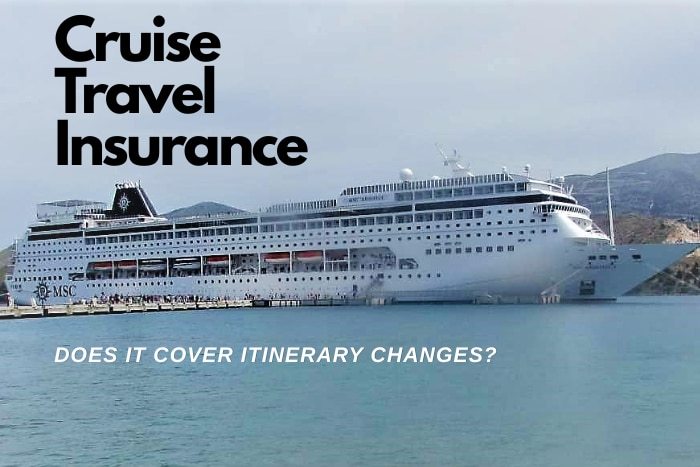

The short answer for Australian cruisers
If you take nothing else from this article, take these four points.
You need travel insurance for a cruise even if the ship never leaves Australian waters. Medicare and private health insurance generally do not apply on board, because most ships are internationally registered and the doctors on board are not Medicare providers. A visit to the ship’s medical centre is charged at private rates, and a medical evacuation at sea can run into six figures.
Standard travel insurance does not automatically include cruising. Many Australian policies treat cruise cover as an add-on you must select when buying. Board a ship without it and you may have no cover at all for anything that happens on the water.
Some cruise lines will not let you board without proof of insurance. Certain itineraries, such as South Pacific cruises calling at New Caledonia, require printed proof of travel insurance with cruise cover at check-in.
Timing matters more than most people realise. Insurance covers unexpected events. Once a hurricane or typhoon has been named and is being reported, it is a known event and a new policy will not cover disruption from it. Buy your insurance when you book the cruise, not the week before you sail.
When Hurricane Dorian rerouted our Caribbean cruise
We were a few days into a seven night Caribbean cruise on the MSC Armonia out of Miami, with ports booked at Roatan Island in Honduras, Costa Maya and Cozumel in Mexico, and Key West in Florida.
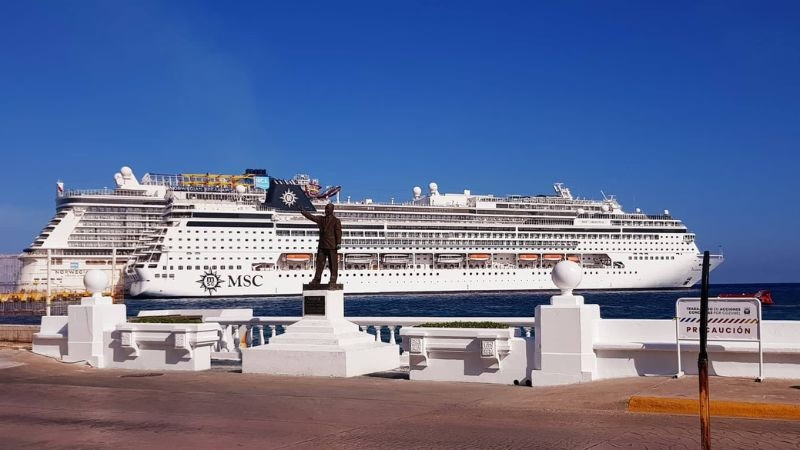
The itinerary had already changed once before we even boarded. Havana was originally the highlight of the cruise, but political changes removed Cuba from the schedule shortly before departure. MSC gave passengers the choice of cancelling or accepting compensation, and we chose to sail. That first change cost us nothing. The second one did.
We were on our way to Key West when Hurricane Dorian, a category 5 storm, threatened the Florida coastline. The captain turned the ship around and headed back to Costa Maya and Cozumel, adding two extra days to the cruise. Safe, sensible seamanship. Also complete chaos for everything we had booked on the other side of that cruise.

We disembarked in Miami two days after our scheduled date. Every onward booking we had made was now wrong.
What insurance covered, and the Luxor lesson
From the ship, we contacted Cover-More, and they confirmed we would be covered for flights and accommodation lost because of the delay. That phone call took the panic out of the situation. We knew that whatever the ship did, we were not going to wear the full cost of it. We’ve used Cover-More ever since, and you can get a quote for your trip here.
As it turned out, we were able to reschedule our flights. The Luxor Hotel in Las Vegas was another story. They refused to refund the three nights we could no longer use, and that non-refundable booking is exactly the kind of loss travel insurance exists for.
The lesson we took away is that itinerary changes rarely cost you money on the ship itself. The cruise line handles that side. Where the money bleeds is everything connected to the cruise. The flights, the hotels, the tours booked for the days after you were supposed to be back on land. That is the gap your insurance needs to cover, and it is worth checking your policy wording specifically for trip delay and missed connection benefits, not just cancellation.
Then it happened again: Typhoon Hagibis
A few weeks later we boarded the Holland America Westerdam for a 13 night repositioning cruise from Vancouver to Japan via Alaska. Repositioning cruises are one of our favourite ways to cruise on a budget, but this one came with a sting in the tail.
Partway across the Pacific, reports started coming through of Typhoon Hagibis heading for Japan. Fellow passengers joked about never cruising with us again. The typhoon hit, our ship was rerouted and delayed, we missed a Japanese port entirely, and we arrived into Yokohama a day late.
That one day cost us part of our Tokyo stay, forced changes to accommodation we had already booked, and left us cutting it very fine for our flight from Tokyo to Thailand. We were fortunate. Some of the Tokyo accommodation could be cancelled free of charge, and we made the flight. We did not need to claim this time, but we boarded that ship knowing that if the dominoes fell the wrong way, we were covered.
Two cruises, two major weather events, two rerouted itineraries in one year. Weather disruption on cruises is not a rare horror story. It is a normal operating risk, and the captain will always choose safety over your onward flight booking.
What cruise travel insurance actually covers
Policies differ, so always read the PDS, but a decent policy with cruise cover will generally include the areas below. These are the ones that mattered to us, or that catch cruisers out most often.
Medical treatment on board and medical evacuation. This is the big one, and the reason insurance is essential even on a Sydney to Brisbane cruise. Onboard medical care is charged privately, and helicopter evacuation from a ship at sea is catastrophically expensive without cover.
Trip delay and disruption. This is what protected us with Dorian. Cover for additional accommodation, rearranged flights, and prepaid arrangements lost because your ship arrived late or was rerouted by weather or another insured event.
Cancellation before you sail. If illness, injury, or another covered event stops you travelling, cancellation cover protects your fare and prepaid extras. This benefit usually starts from the day you buy the policy, which is the strongest argument for insuring at booking time rather than closer to departure.
Missed departure and missed connections. If a delayed flight means you miss the ship, or a late ship means you miss your flight home, this benefit deals with the recovery costs. Given how close we came in Yokohama, we consider it essential for any cruise with flights at either end.
Luggage and personal effects. Standard, but worth checking limits if you travel with camera gear or other expensive items.
The traps that catch cruisers out
Cruise cover is often an optional add-on. If your policy has a cruise option and you did not tick it, you are likely not covered on board. Do not assume.
Domestic does not mean covered. A cruise around the Australian coastline on an internationally registered ship is treated as international travel for medical purposes. You need an international policy with cruise cover, or the Australian waters option some insurers offer.
List every port. When buying a policy you generally need to declare all the countries you will visit, including ports where you only step ashore for a few hours.
Known events are not covered. Once a storm is named, it is too late to buy cover for it. Insure when you book.
Being uncontactable is a trap of its own. Insurance only helps if you can reach your insurer when things go wrong, and the moment you need them is usually the moment you’re overseas with no local SIM. Our claim conversation with Cover-More happened from a ship in the middle of the Caribbean. Make sure you can actually contact your insurer from overseas, and sort your data before you leave. An international eSIM is the easiest way to stay reachable.
Shore excursions have their own rules. Snorkelling, jet skis, quad bikes and other adventure activities at ports may need an adventure activities option. Check before you book the excursion, not after the injury.
Pre-existing medical conditions must be declared. Some conditions are covered automatically, others require assessment and an extra premium. One of our readers was quoted anywhere from $2,500 to $9,500 for cruise insurance due to a heart condition. It is a real cost, but it is also the exact situation where being uninsured on a ship is the biggest gamble of all.
Which insurer we use
We insure with Cover-More and have done for years, and the reason is simple: when our cruise was rerouted by a category 5 hurricane, they picked up the phone, confirmed our cover on the spot, and took the stress out of a situation we had no control over. That experience is worth more to us than any comparison table.
That said, the right policy depends on your trip, your health, and your budget, so compare the inclusions, check the cruise cover wording, and read the PDS before you buy. Whatever insurer you choose, the golden rules are the same. Buy it when you book, make sure cruise cover is included, declare your conditions, and list every port.
Frequently asked questions
Do I need travel insurance for a cruise in Australian waters?
Yes. Medicare and private health cover generally do not apply on board, even between Australian ports, because ships and their medical staff are typically internationally registered. Onboard treatment is billed at private rates.
Does travel insurance cover missed ports?
Missed ports themselves are usually handled by the cruise line, often with onboard credit or partial refunds of port charges. Insurance comes into play for the knock-on costs, such as lost prepaid shore excursions booked independently, or disruption to your onward travel. Check your policy wording for what qualifies.
Does travel insurance cover a cruise rerouted by a hurricane or cyclone?
Generally yes, if you bought the policy before the storm was named or became a known event. This is why buying at booking time matters. Cover typically extends to additional accommodation, rearranged flights, and prepaid arrangements you lose because of the disruption.
When should I buy travel insurance for a cruise?
The day you book the cruise. Cancellation cover starts immediately, and you are protected against events that have not yet happened. Waiting until the week before you sail leaves a long window where deposits and payments are unprotected. Waiting until the week before you sail leaves a long window where deposits and payments are unprotected, so get a quote when you book.
Will the cruise line compensate me if the itinerary changes?
Sometimes, and it varies. When Cuba was pulled from our MSC itinerary before departure, MSC offered the choice of cancelling or compensation. When weather rerouted us mid-cruise, the line’s obligation was to keep us safe, fed and housed, not to fix our onward travel plans. That part is on you and your insurance.
Last words on cruise travel insurance
Two cruises, two named storms, two rewritten itineraries in one year. We never expected either of them, and that is the entire point. Nobody books a cruise planning for a hurricane, but the ocean does not check your itinerary before it changes it.
The cruise itself is the part someone else is responsible for. The captain will keep you safe and the cruise line will keep you fed. It is everything wrapped around the cruise, the flights, the hotels, the non-refundable nights in Las Vegas, that lands on you when the ship arrives two days late. That is the gap insurance filled for us, and the phone call from the middle of the Caribbean confirming we were covered turned a crisis into an inconvenience.
So insure the day you book, make sure cruise cover is actually included, and then get on with looking forward to the trip. If it all goes smoothly, the premium bought you peace of mind. If it doesn’t, it might be the best money you spent on the whole holiday.
Related Reading
Packing for your cruise? Our guide to plus size cruise wear covers what actually works on board.
Still deciding where to sail? Browse our favourite memorable cruise vacations for inspiration.
Staying connected at sea and in port is easier than you think. Here’s how to sort your internet when travelling.